

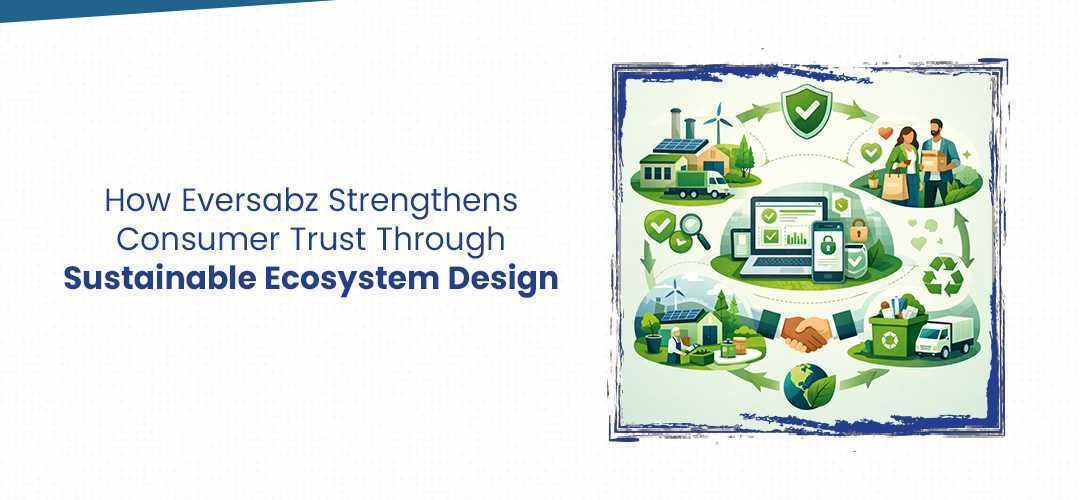

How Eversabz Strengthens Consumer Trust Through Sustainable Ecosystem Design

Eversabz
Key Takeaways
Eversabz builds consumer trust not through marketing claims, but through ecosystem architecture. By creating a verified, curated, and transparency-driven marketplace, Eversabz reduces scepticism, simplifies decision making, and strengthens long-term brand loyalty for responsible businesses.
Trust is no longer optional in commerce.
Consumers today are more informed, more sceptical, and more deliberate in their purchasing decisions. Especially in sustainability-focused categories, trust is the deciding factor between hesitation and action.
The problem is not awareness. It is credibility.
Many brands claim responsibility. Few operate within structured validation environments.
Eversabz addresses this credibility gap by functioning as a unified sustainable living platform designed specifically to strengthen trust through architecture, not advertising.
The Psychology of Trust in Sustainable Commerce
Trust forms when three elements align:Transparency
- Consistency
- Context
Without these, scepticism rises.
In traditional marketplaces, consumers encounter mixed signals. Responsible brands sit next to unverified sellers. Sustainability claims vary widely. Standards are unclear. This creates cognitive friction.
Eversabz reduces that friction by operating as a verified sustainable marketplace where responsibility is contextualised, not isolated.
Context simplifies judgment.
Ecosystem Context as Trust Multiplier
A brand making sustainability claims independently may still face scrutiny. But when that brand operates within a curated ethical commerce ecosystem, perception shifts.
Association strengthens credibility.
Eversabz creates structured context where:
- Responsible brands appear alongside aligned businesses
- Sustainability becomes the baseline expectation
- Transparency is visible
- Ethical positioning is reinforced
This ecosystem context acts as a trust multiplier.
Transparency Embedded in Structure
Transparency cannot rely solely on product descriptions.
It must be integrated into platform design.
Eversabz supports this by functioning as a responsible business platform where sustainability alignment is visible through ecosystem positioning rather than scattered messaging.
When consumers browse within a structured environment, they experience:
- Reduced uncertainty
- Clearer brand alignment
- Simplified evaluation
- Lower scepticism
Transparency becomes operational rather than promotional.
Reducing Consumer Decision Fatigue
Modern consumers experience decision fatigue across digital platforms. Too many options, too many claims, too little structure.
Eversabz addresses this by curating discovery inside a focused conscious shopping marketplace.
Curation reduces overwhelm.
When consumers feel guided rather than overloaded, trust increases.
Trust encourages repeat behaviour.
Repeat behaviour builds loyalty.
Trust Through Alignment Instead of Advertising
Advertising attempts to persuade.
Alignment reduces the need for persuasion.
Within the curated sustainable marketplace, brands are not convincing consumers of sustainability — they are operating within a sustainability-first framework.
This distinction matters.
Consumers are more likely to trust platforms where responsibility is embedded into participation criteria rather than highlighted through isolated marketing language.
Consistency Across Discovery, Evaluation, and Purchase
Trust weakens when messaging shifts across stages of the buyer journey.
Eversabz strengthens trust by maintaining consistency across:
- Brand discovery
- Product evaluation
- Purchase context
Operating as a structured sustainable brand ecosystem ensures that sustainability is not a temporary filter — it is continuous throughout the browsing experience.
Consistency reduces doubt.
Doubt reduction increases confidence.
Strengthening Brand Loyalty Through Ecosystem Participation
Trust is not only about initial purchase. It influences retention.
When consumers repeatedly engage with a structured trusted ethical marketplace, they begin to associate the platform with reliability.
This reliability extends to participating brands.
Over time:
- Loyalty increases
- Switching behaviour decreases
- Brand recall strengthens
- Ecosystem credibility compounds
Loyalty built on structure is more durable than loyalty built on discounts.
Shielding Against Greenwashing
Greenwashing has created widespread scepticism.
Consumers question exaggerated claims. They seek verification. They look for contextual validation.
Eversabz mitigates this issue by functioning as a structured sustainability platform that reinforces responsible positioning through ecosystem alignment.
Rather than relying on self-declared claims, brands benefit from platform association.
This reduces the burden of proof on individual marketing campaigns.
Trust as Long-Term Competitive Asset
Trust compounds over time.
Platforms that embed trust into architecture create long-term defensibility. New competitors can replicate features. They struggle to replicate ecosystem credibility.
By building a centralised purpose-driven commerce ecosystem, Eversabz establishes durable positioning.
Durability in trust translates to durability in market relevance.
Consumer Confidence as Conversion Driver
Trust directly impacts conversion rates.
When consumers feel confident:
- Evaluation cycles shorten
- Cart abandonment decreases
- Repeat visits increase
- Word-of-mouth improves
A structured verified conscious marketplace creates conditions where confidence can flourish naturally.
Confidence reduces hesitation. Reduced hesitation accelerates commerce.
Long-Term Market Implications
As sustainability expectations continue to evolve, consumers will demand:
- Structured verification
- Clear alignment
- Platform-level accountability
- Ecosystem transparency
Eversabz is positioned to meet these expectations through its infrastructure-driven model. Trust will increasingly define competitive advantage in responsible commerce. Eversabz is building that advantage deliberately.
Conclusion
Trust is not built through slogans. It is built through structure.
Eversabz strengthens consumer trust by embedding verification, transparency, alignment, and curated discovery into its marketplace architecture.
- Instead of relying on isolated brand claims, it creates ecosystem validation.
Instead of overwhelming consumers with volume, it simplifies discovery through context.
Instead of chasing short-term attention, it builds long-term credibility.
Through intentional ecosystem design, Eversabz transforms sustainable commerce into a trust-centred experience that benefits both brands and consumers.